Streampoint: 2019-2022
🛌 Resiada
Project Overview
Led the 0-1 design and subsequent iterations of Resiada, a B2B+B2C hotel room management platform for event planners and attendees by Streampoint. The platform streamlined hotel block management for events, replacing fragmented manual processes with an integrated booking experience. Resiada launched in 2019, won the SISO Event Innovation Battlefield award, and grew from zero to six-figure revenue within its first year.
Role and Team: Led design as Senior Product Designer from conception through launch and ongoing iterations. Worked closely with development team (~8 full-stack developers), project managers, and external event planner clients. Contributed minor front-end code (ReactJS, SCSS) during implementation to ensure design fidelity and accelerate delivery.
🔎 Problem Statement
- Event planners managed hotel blocks using spreadsheets and email, creating operational chaos and booking errors during high-volume periods
- Existing platforms (Passkey, OnPeak) were prohibitively expensive for small-to-medium events and offered outdated, difficult-to-use interfaces with minimal customization options
- Event organizers lacked ability to customize booking site branding or monetize through sponsorships and advertisements, missing revenue opportunities
- Public-facing booking sites weren’t multilingual, multi-currency, or accessibility compliant, limiting international event reach
- Attendees often switched to booking directly through consumer sites (Expedia, Hotels.com) rather than using clunky event-specific platforms, reducing organizer commission capture
🎯 Goals / Ways of Measuring Success
Primary Metrics:
- Platform adoption rate among existing Streampoint event clients
- Booking completion rate and time-to-book vs competitor benchmarks
- Support ticket volume for setup and booking issues
- Total room nights booked through platform
- Full WCAG 2.0 AA accessibility compliance achievement
Business Metrics:
- Converting beta users to paying customers within first year
- Number of events and hotel rooms managed through platform
- Industry recognition and competitive differentiation
🧑🔬 Research Takeaways
Key Insights: Conducted interviews with 12+ event planners including current Streampoint clients and potential enterprise customers, and analyzed competitor platforms (Passkey, OnPeak, MeetingMax) alongside consumer booking sites (Airbnb, Expedia). Event planners reported two distinct pain points: setup complexity for organizers and poor booking experiences for attendees. Enterprise clients specifically emphasized the need for greater customization options and sponsorship/ad placement capabilities to generate revenue and maintain brand consistency. Research revealed that many planners abandoned event-specific platforms entirely (directing attendees to book independently) resulting in lost commission revenue and fragmented room block management.
Competitive Analysis: Industry platforms prioritized enterprise features over user experience, resulting in powerful but visually unfriendly systems with limited customization options. Consumer booking sites (Airbnb, Expedia) offered superior experiences but lacked event-specific functionality like block management and group rates. This gap presented an opportunity: combine consumer-grade UX with event management capabilities and flexible customization.
Design Approach: Led a phased design process starting with stakeholder workshops to identify required features and information architecture for both setup flow and public booking site. Created grayscale wireframes deliberately to focus feedback on UX rather than visual design during early iterations. Conducted two rounds of mockup reviews with external clients: first round emphasized usability and workflow, second round refined visual design and brand presentation. Collaborated closely with development team throughout, contributing front-end code to accelerate delivery timelines. Prioritized mobile-first approach given event attendee booking patterns.
Initial Designs: Setup Flow
Early wireframes exploring the guided setup flow concept. These mockups focused on gathering stakeholder feedback on information architecture and workflow logic rather than visual design. The multi-step approach emerged from recognizing the need to handle all sizes and types of events. Each step and section is also dynamic depending on the event’s needs.
Initial Designs: Public Booking Site
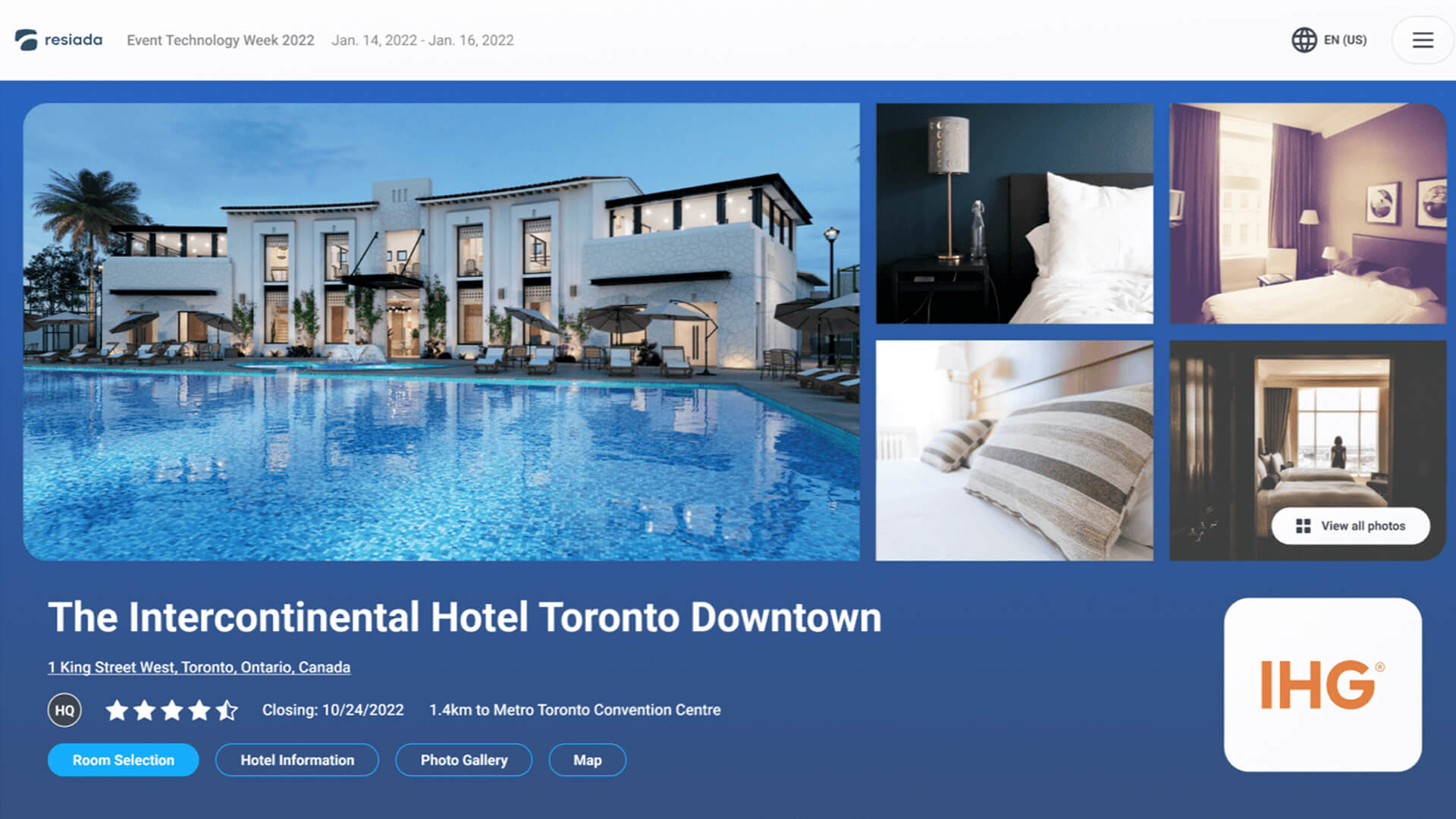
Initial iterations of the public-facing booking site exploring core user flow from hotel selection through checkout. v1 used deliberately minimal styling to focus feedback on UX and conversion optimization, establishing foundational flow structure. v2 incorporated stakeholder feedback by introducing visual design direction, customization zones for event branding, and sponsor placement capabilities. This refined version was presented to potential and current clients to validate both look-and-feel and business model viability before moving to final implementation.
Final Designs
Production-ready experiences with styling, responsive design, and performance optimization. The wizard balanced simplicity for basic events with advanced features for complex conferences through dynamic conditional logic. The booking site delivered consumer-grade UX with mobile responsiveness, WCAG 2.0 AA compliance, and flexible customization within defined guardrails.
📈 Learnings and Performance
Results Achieved:
- Won 2019 SISO Event Innovation Battlefield award, receiving industry recognition for ease of use and advanced feature set
- Grew from zero to six-figure revenue within first year, exceeding initial business projections
- Managed 50+ events through platform with hotel room blocks ranging from 10 to 1,000+ rooms in the first year
- Reduced booking time by 60% compared to previous manual processes, based on client feedback and time-on-task analysis
- Achieved dramatic reduction in support tickets for event setup post-wizard launch
- Successfully delivered fully responsive platform while competitors remained desktop-only
- Achieved full WCAG 2.0 AA and ADA compliance, making platform accessible to all attendees across international events
Key Design Insights: The “wizard” concept emerged from recognizing that event complexity varied dramatically. Some events were simple 20-person meetups, but our target market were the most complex ones. The design adapted dynamically based on early feature selection, making simple events effortless while keeping advanced capabilities accessible. This progressive disclosure approach became the platform’s competitive advantage.
Mobile-first design proved critical for conversion. User research revealed the majority of bookings happened on phones during commutes or between sessions, making mobile optimization essential. The booking site required balancing event organizer customization needs with attendee booking efficiency.
Collaboration & Technical Challenges: Performance optimization required close collaboration with the development team. Load testing revealed the platform could only handle ~25 simultaneous bookings initially. Through collaborative work (virtualized rendering, progressive loading, database optimization), we scaled to hundreds of concurrent bookings without additional infrastructure. Contributing front-end code during implementation allowed rapid iteration on interaction details that would have been lost in traditional design handoff.
Accessibility compliance (WCAG 2.0 AA) required partnering with developers to implement proper semantic HTML, ARIA labels, and keyboard navigation. Post-launch, client feedback identified gaps in multi-currency handling for international events. If repeating this project, I would have invested more heavily in early internationalization research (especially multi-currency support proved more challenging than expected).
☎️ Detailed Results and Prototypes
I’m happy to share specific adoption metrics, revenue impact data, prototypes, and additional design iterations during a portfolio review call. This includes things like quantitative performance data, A/B testing results, and technical implementation details that demonstrate the full scope and business impact of this initiative.