Roofr: 2023
📇 CRM MVP
🧑🔬 Research Takeaways
Key Insights: Through stakeholder interviews and customer discovery, identified that contractors not heavily entrenched in existing CRMs represented the primary opportunity. Analysis of competitor platforms (JobNimbus, AccuLynx, JobProgress) revealed that most offered bloated feature sets that overwhelmed smaller operations, creating an opening for a streamlined, workflow-focused approach. Customer interviews emphasized the importance of connecting existing Roofr functionality (measurements, proposals) into a cohesive job lifecycle rather than building isolated CRM features.
Strategic Constraints: Product requirements document outlined an ambitious 1-year+ vision requiring careful scoping to deliver near-term value. MVP needed to balance foundational infrastructure (job entities, statuses, assignments) with immediately useful capabilities (task management, activity tracking, file uploads) while maintaining technical flexibility for future expansion into automation and analytics.
Mockups/Designs
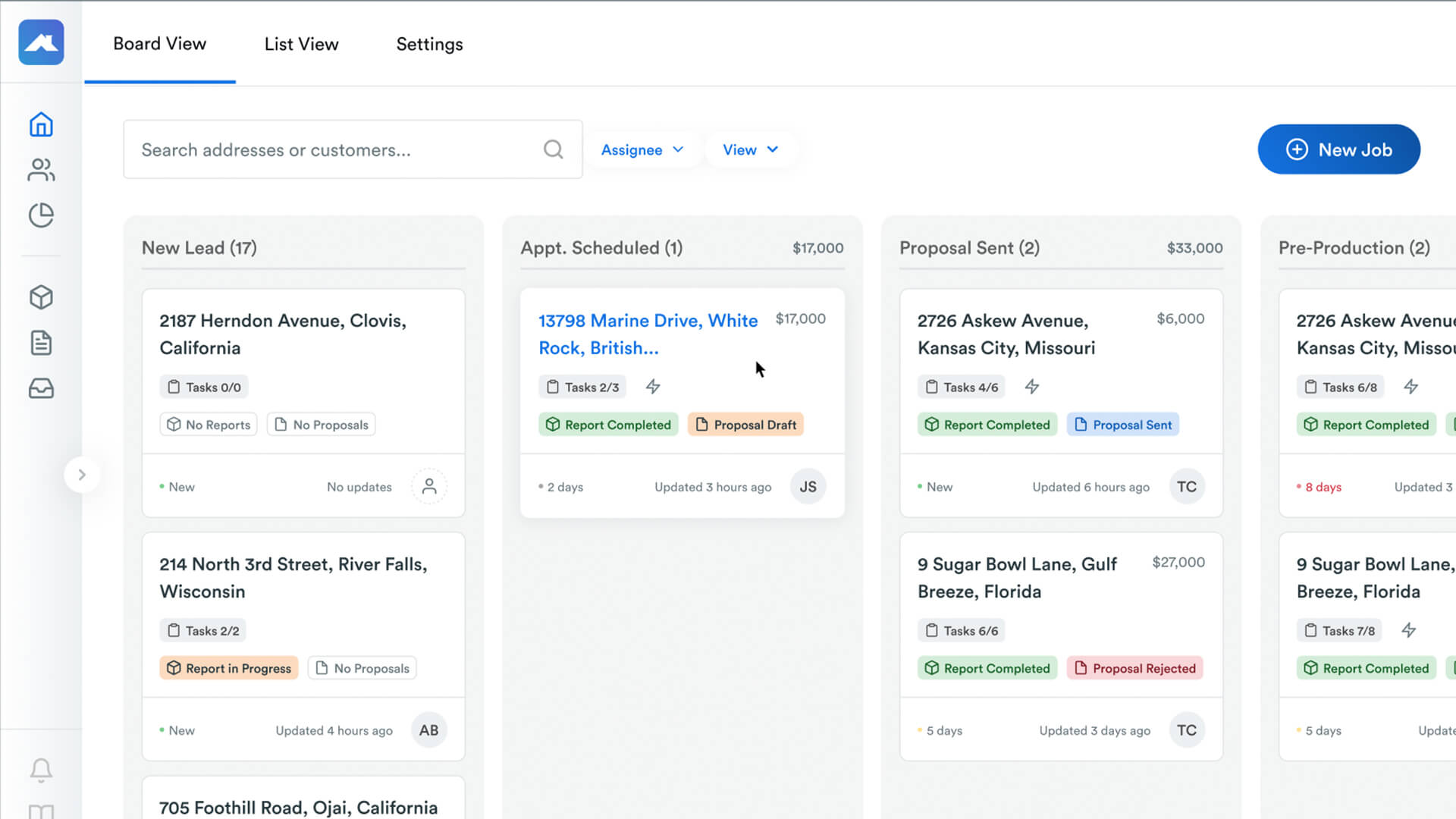
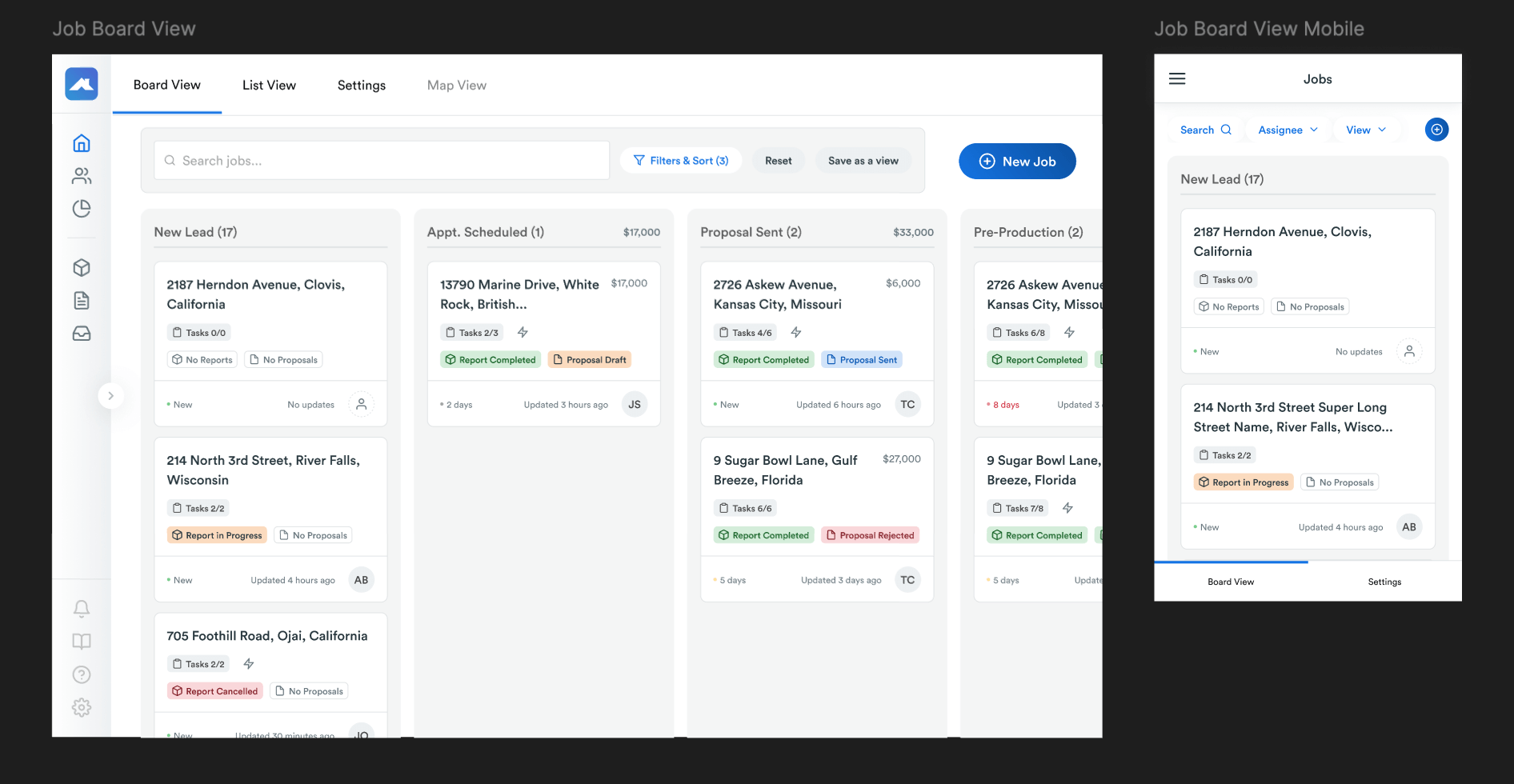
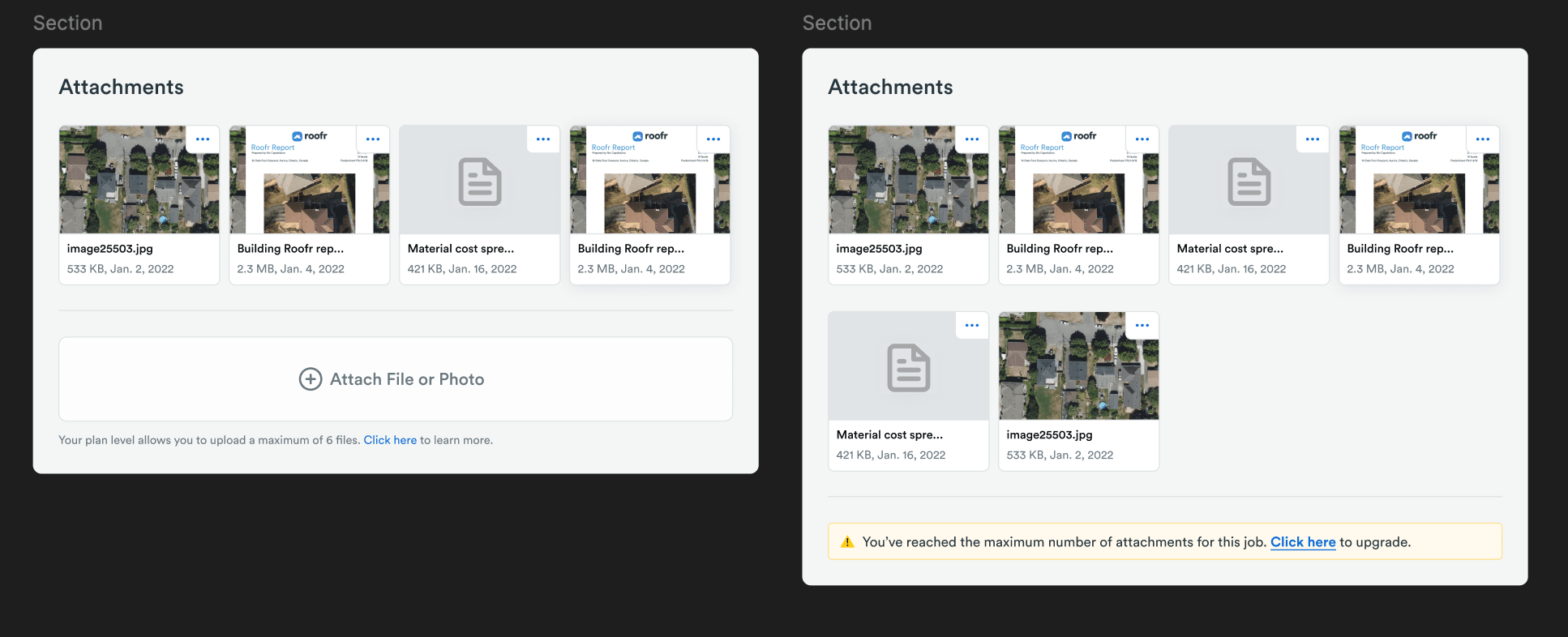
High-fidelity designs exploring the Kanban board workflow, job detail architecture, and cross-feature integration points. Established core interaction patterns for job creation, status management, task assignment, and file attachments while connecting existing Roofr entities (measurements, proposals, contacts) into a unified job lifecycle.

Final Prototype
Interactive prototype used for enterprise prospect demonstrations and beta customer onboarding prior to feature completion. High-fidelity visuals with realistic contractor data scenarios validated the value proposition and workflow benefits before full implementation, helping secure early adopters and enterprise deals.
📈 Learnings and Performance
Results Achieved:
- Task completion grew from 0 to 800/month within first year post-launch, reaching 1,500/month among current active users (validating core workflow adoption)
- File attachment usage reached 5.92% of daily active users, indicating strong platform stickiness through document storage integration
- Job stage/workflow updates achieved 32.8% adoption among Elite (paid) subscribers, demonstrating value of structured pipeline management
- Contact creation flow engagement increased from 25% pre-CRM to 34.2% monthly usage, showing improved cross-feature integration
Key Takeaways: The project required significant stakeholder alignment around MVP scope, as the initial product requirements document outlined functionality far beyond what could be delivered in the first iteration. I facilitated cross-functional discussions to identify the minimum feature set that would enable “lead to closed” workflow management while deferring advanced capabilities like automation, scheduling, and analytics dashboards.
Early design decisions prioritized connecting existing entities (customers, measurements, proposals) through a new Jobs architecture rather than building parallel systems, which proved critical for adoption. The Kanban/Trello stye board visualization became the primary interface despite initial engineering concerns about performance with large datasets, requiring careful optimization of card rendering and list summarization.
Technical constraints around entity relationships (particularly whether jobs could exist without contacts) necessitated architecture discussions that influenced long-term platform flexibility. The decision to allow “contactless” jobs created complexity in the contact creation flow but enabled faster job capture (a tradeoff that significantly improved adoption metrics).