
Streampoint: 2022
🔎 Global Search
🧑🔬 Research Takeaways
Key Insights: User and internal stakeholder interviews revealed that customer success teams frequently needed to search across both events and attendees simultaneously. Workflow analysis showed that context-aware results could eliminate 60% of secondary searches and reduce frustration.
Competitive Analysis: Analyzed search implementations in large platforms like Salesforce, HubSpot, and Notion, finding that best-in-class solutions provided contextual result prioritization and unified filtering. Most event B2B platforms lacked smart contextual adaptation based on what the user is currently viewing.
Mockups/Designs
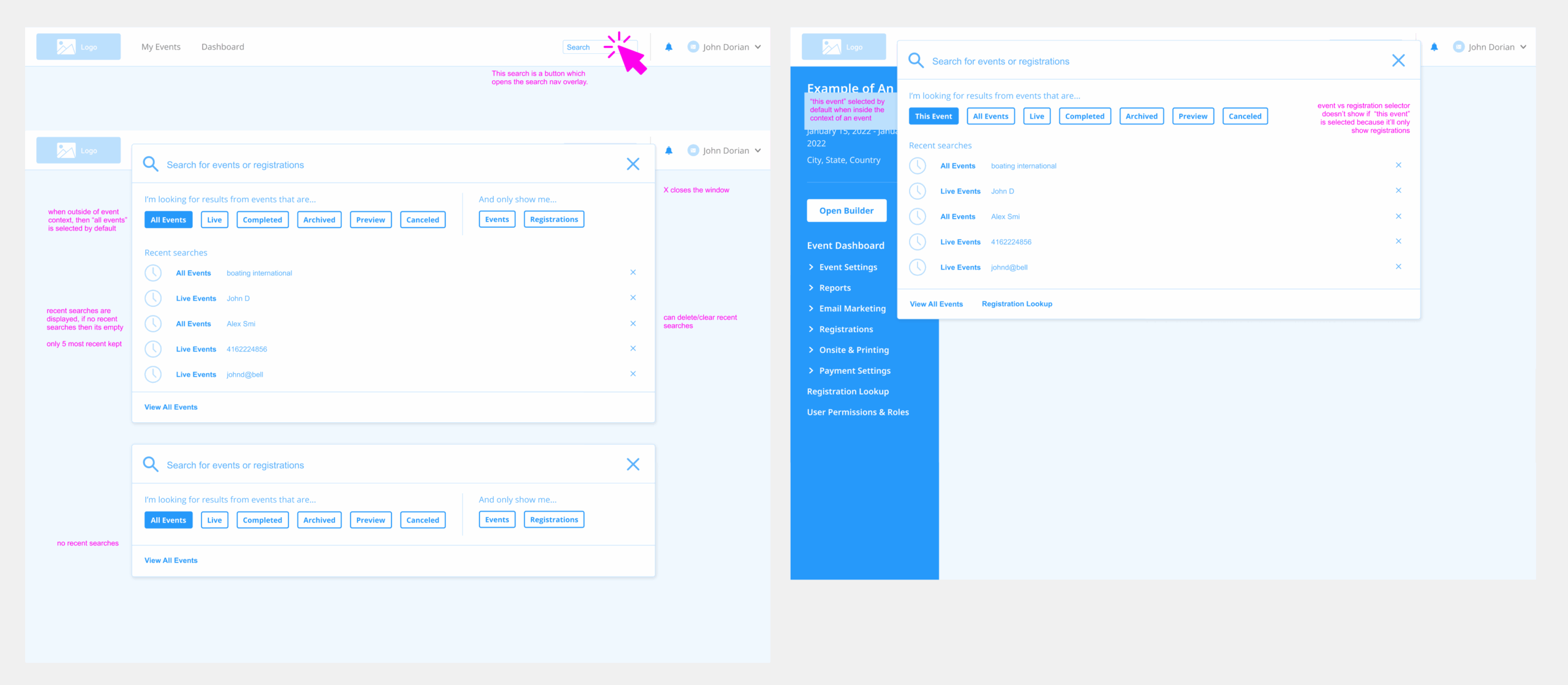
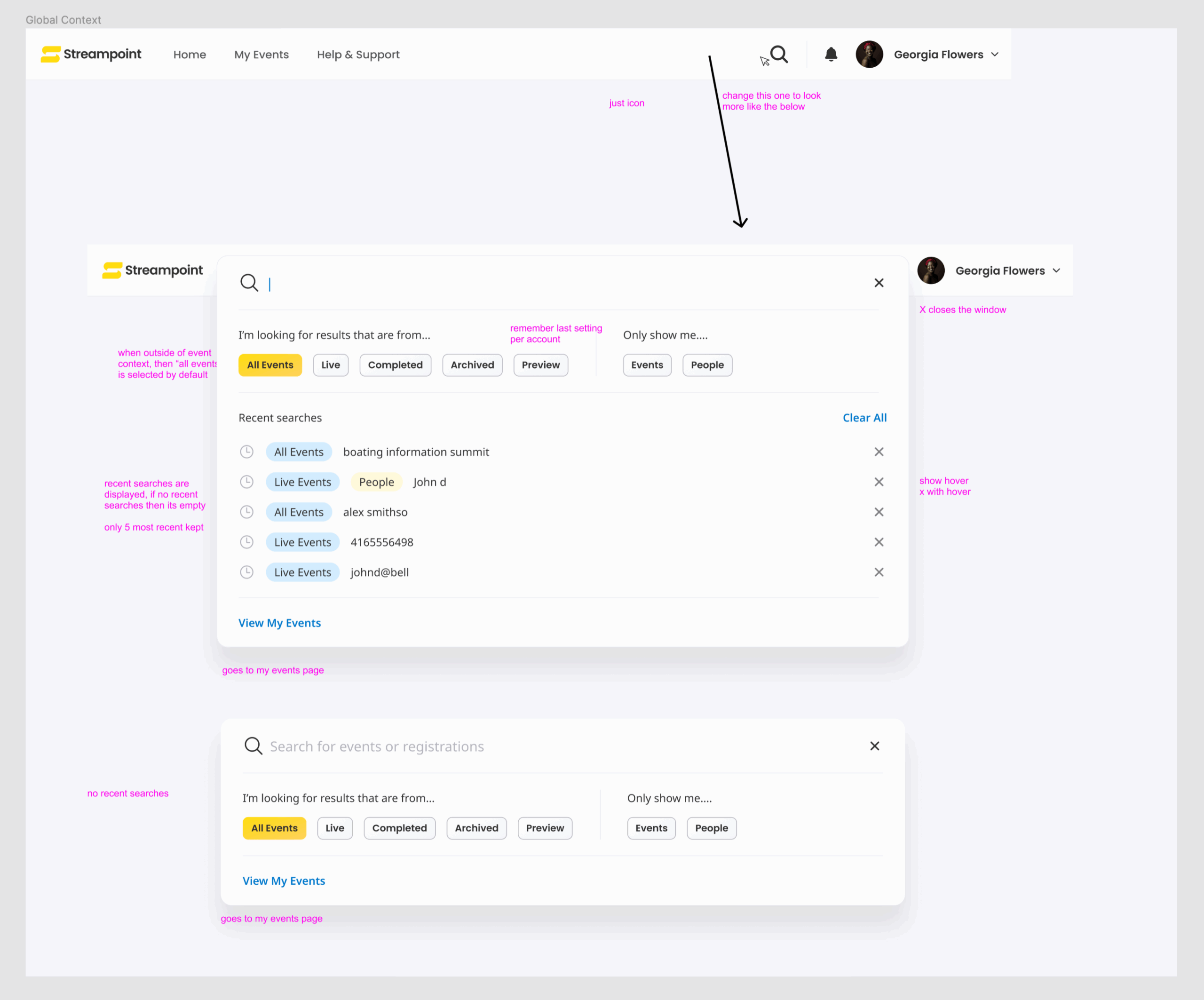
Initial mockups explored multiple approaches to unified search, comparing global navigation placement versus contextual search patterns. Wireframes mapped edge cases, context-aware result prioritization logic, and the interaction model for filtering across both events and attendee records. These designs were refined through collaboration with engineering to address technical feasibility around search indexing performance and result pagination strategies.

Final Result
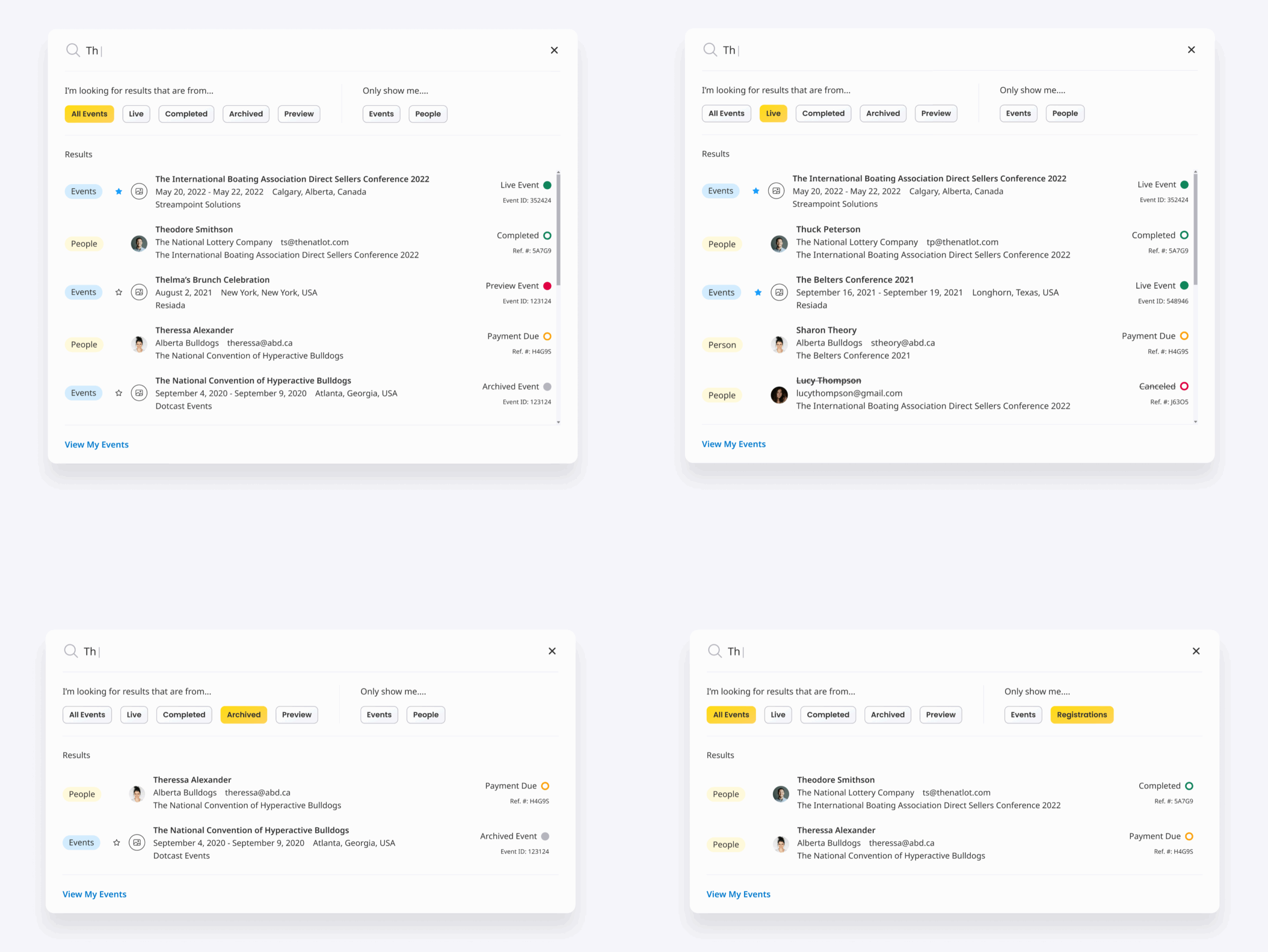
Production experience with contextual result prioritization and optimized search performance. The final version incorporated usability testing feedback showing users expected results relevant to their current page context, resulting in smart ranking algorithms that adapted to workflow location. Technical constraints around massive event datasets necessitated progressive loading patterns and animation states to communicate system processing.
📈 Learnings and Performance
Results Achieved:
- Reduced average time to find search results by 20%+ across all user types during beta testing, expecting better results on launch as more customers use it
- Achieved unified search experience that eliminated need for separate search interfaces
- Successfully implemented contextual result prioritization that adapted to user workflow needs
Key Takeaways: Early usability testing revealed that users expected search results to be contextually relevant to their current page, requiring careful consideration of result ranking algorithms. Technical constraint around search indexing performance necessitated smart result pagination that influenced the interaction design approach. Results will pause before showing and sometimes require lazy loading due to some events having massive amounts of records.