Streampoint: 2022

šŸ¤– Automations

Project Overview

Designed a self-service rules automation engine for Streampoint’s B2B event platform, enabling customers to implement complex business logic without developer involvement. This strategic initiative addressed scalability constraints and reduced customer support overhead by empowering users to configure conditional content display and field requirements independently.

Role and Team: Led design as the primary designer working with one engineering lead and five full-stack developers. Collaborated cross-functionally with customer success and sales teams to validate requirements and ensure it would work at scale Frequent reviews and feedback sessions with another product designer and the design director.

šŸ”Ž Problem Statement

  1. Developer bottleneck: Every customer configuration request required engineering resources, creating significant delays and limiting platform scalability for complex event requirements
  2. Geographic compliance gaps: International events lacked automated handling of country-specific registration requirements, forcing manual workarounds that introduced errors
  3. Content personalization limitations: Static event pages couldn’t dynamically adapt to attendee characteristics, reducing engagement and conversion rates
  4. Enterprise sales friction: Lack of advanced automation capabilities became a barrier during enterprise prospect evaluations, particularly for global organizations

šŸŽÆ Goals / Ways of Measuring Success

Primary Metrics:

  • Developer ticket reduction for configuration requests (targeting 100% elimination)
  • Customer support team capability to handle all configuration requests independently
  • Rules engine adoption rate among existing customers
  • Support resolution time for event configuration requests

Business Metrics:

  • Customer satisfaction for event setup workflows
  • Enterprise deal velocity improvement
  • Customer retention rates for high-complexity event organizers

šŸ§‘ā€šŸ”¬ Research Takeaways

Key Insights: Customer interviews revealed two distinct automation needs: compliance-driven rules for regulated industries and engagement optimization for marketing teams. Technical discovery sessions identified existing platform limitations around conditional logic processing that would require architectural considerations.

Competitive Analysis: Evaluated enterprise event platforms mainly Cvent and Bizzabo, finding that most offered basic conditional logic but lacked intuitive visual rule builders. This presented an opportunity to differentiate through user experience rather than pure functionality.

Mockups/Designs

Initial wireframes exploring the visual rule builder interface and conditional logic structure. These low-fidelity designs were used for technical feasibility review with engineering, establishing the interaction model for nested conditions, rule depth, and configuration complexity before investing in high-fidelity design work.
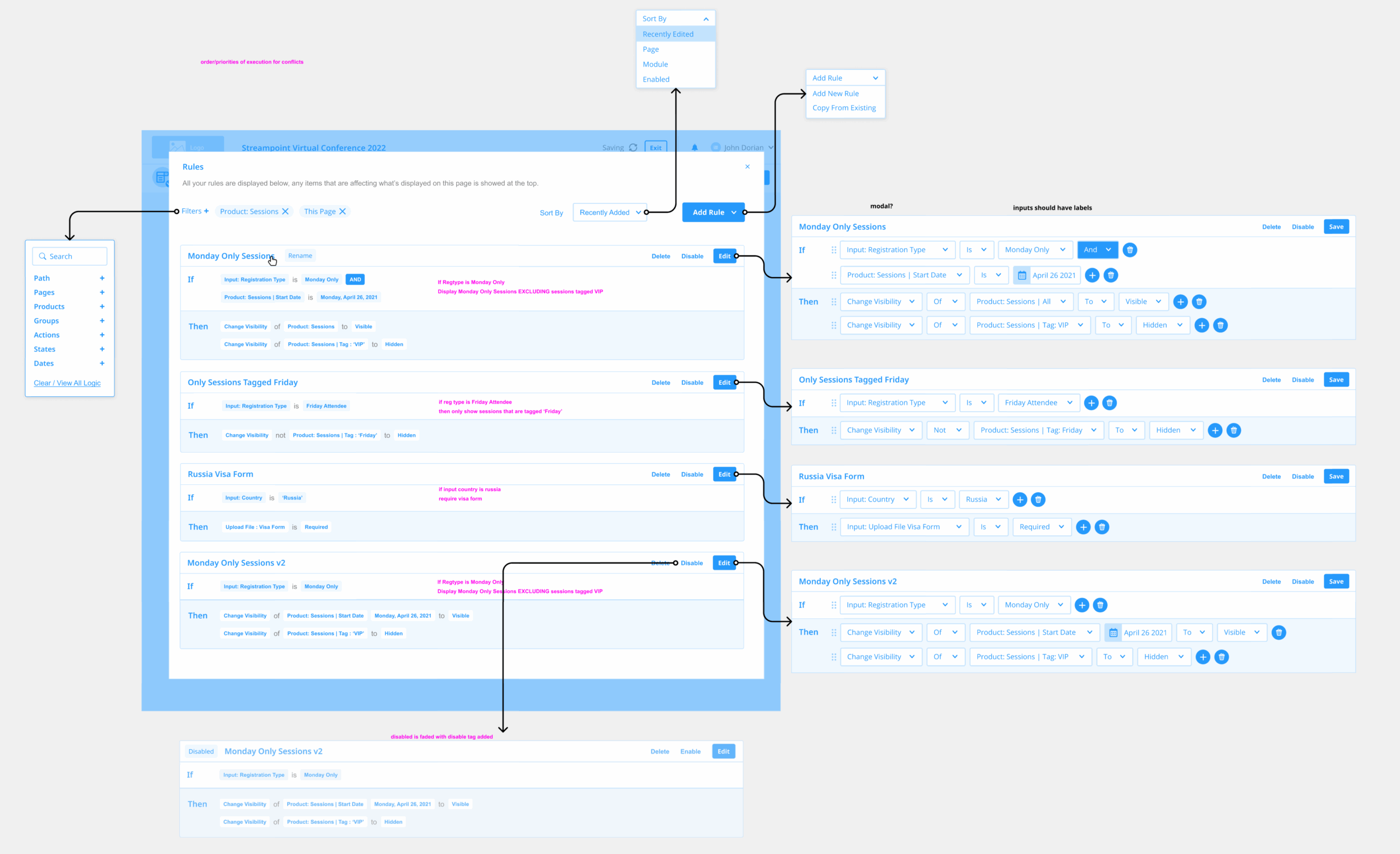
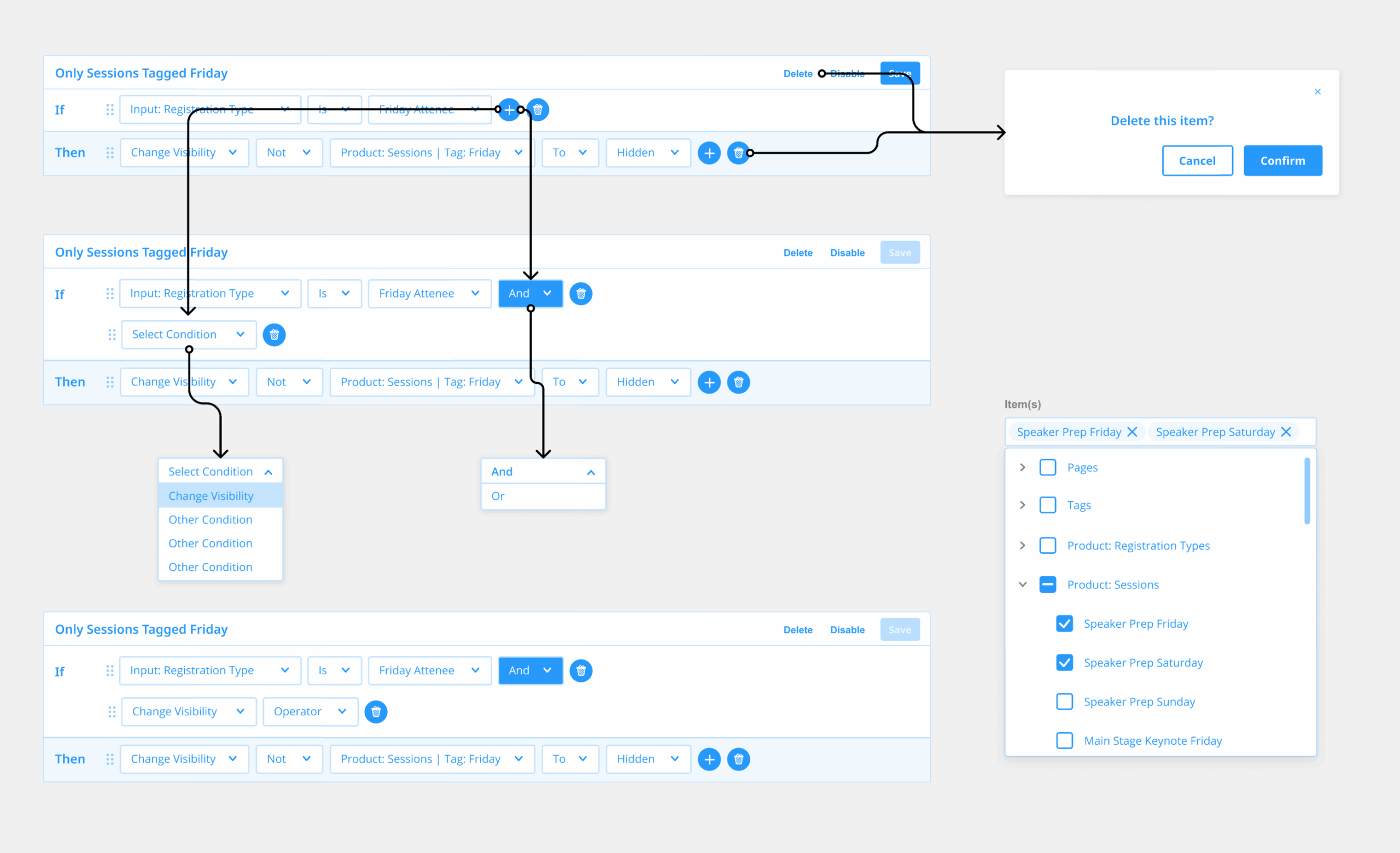
Early mockups for a technical feasibility review

Early mockups for a technical feasibility review

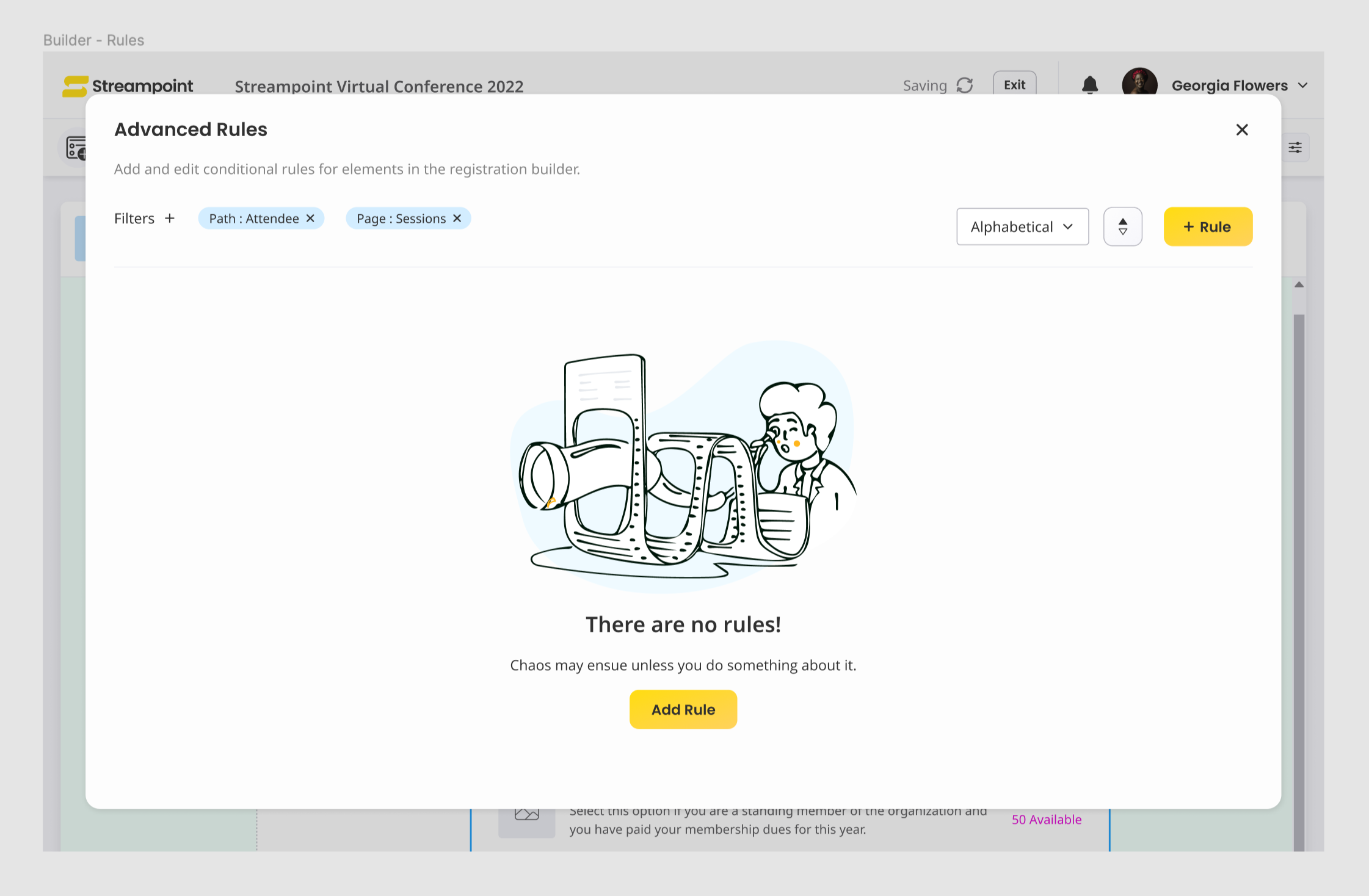
Empty state

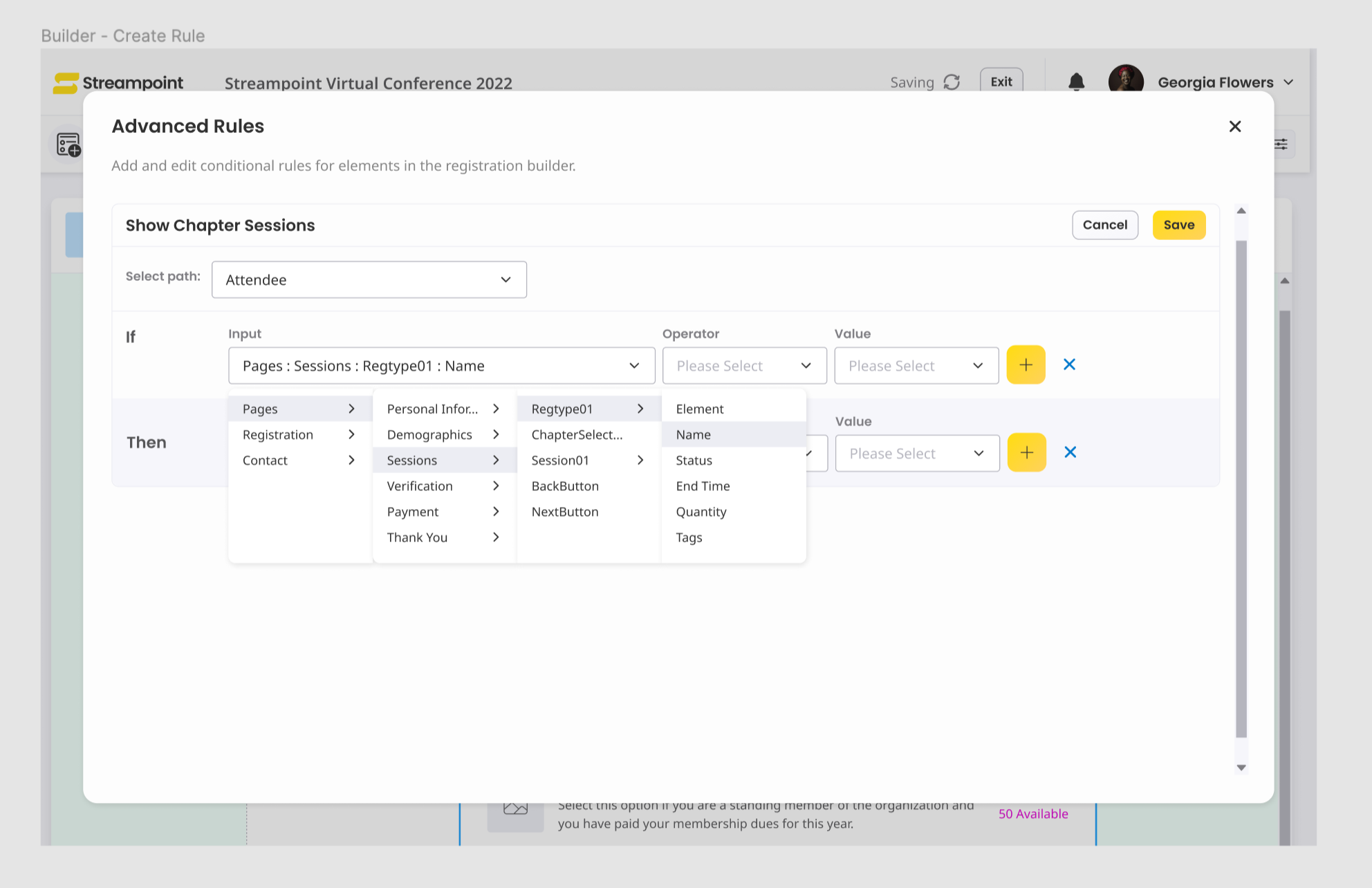
Showing the multiple levels/depth of options

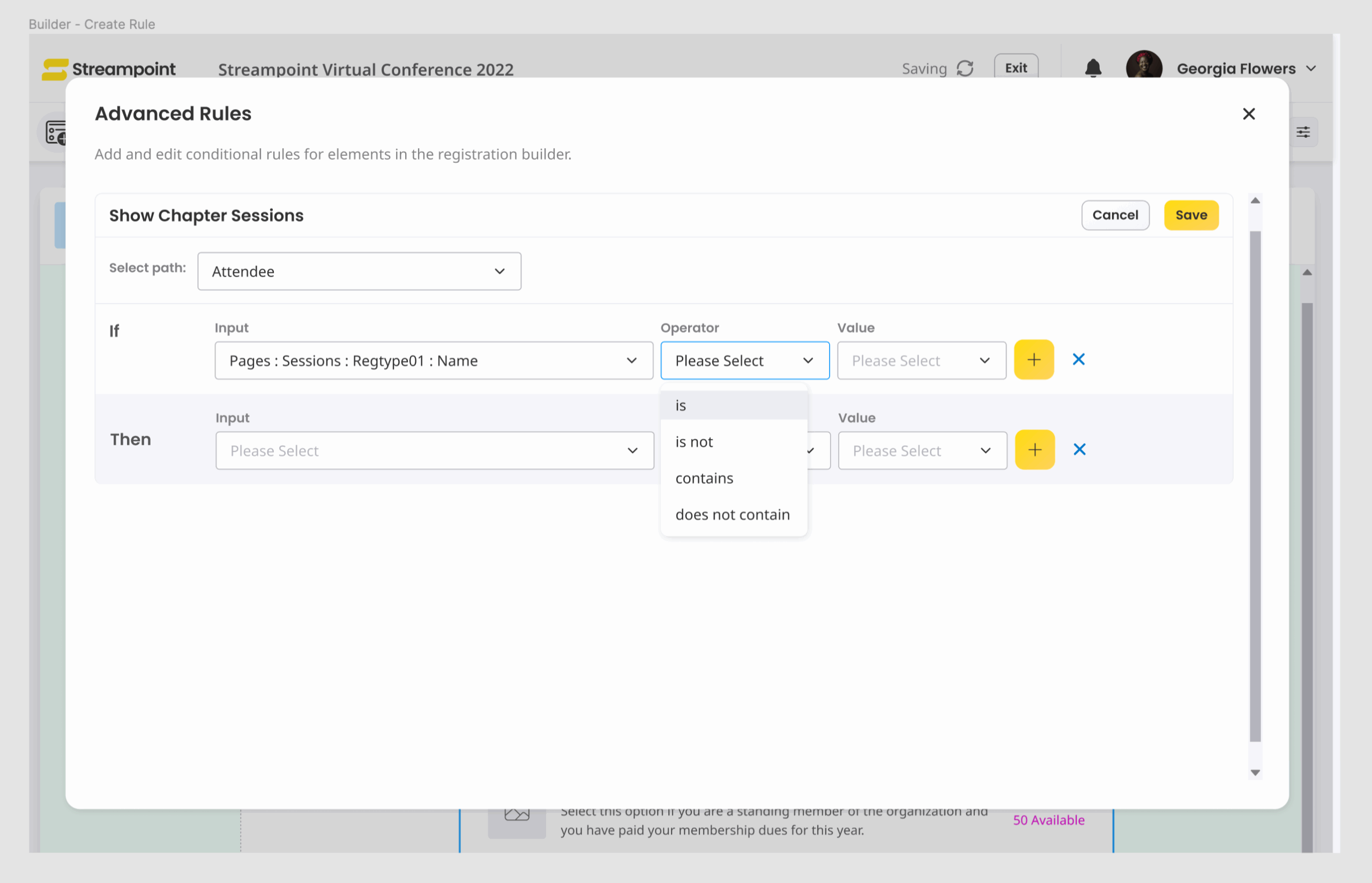
Showing a very simple setup

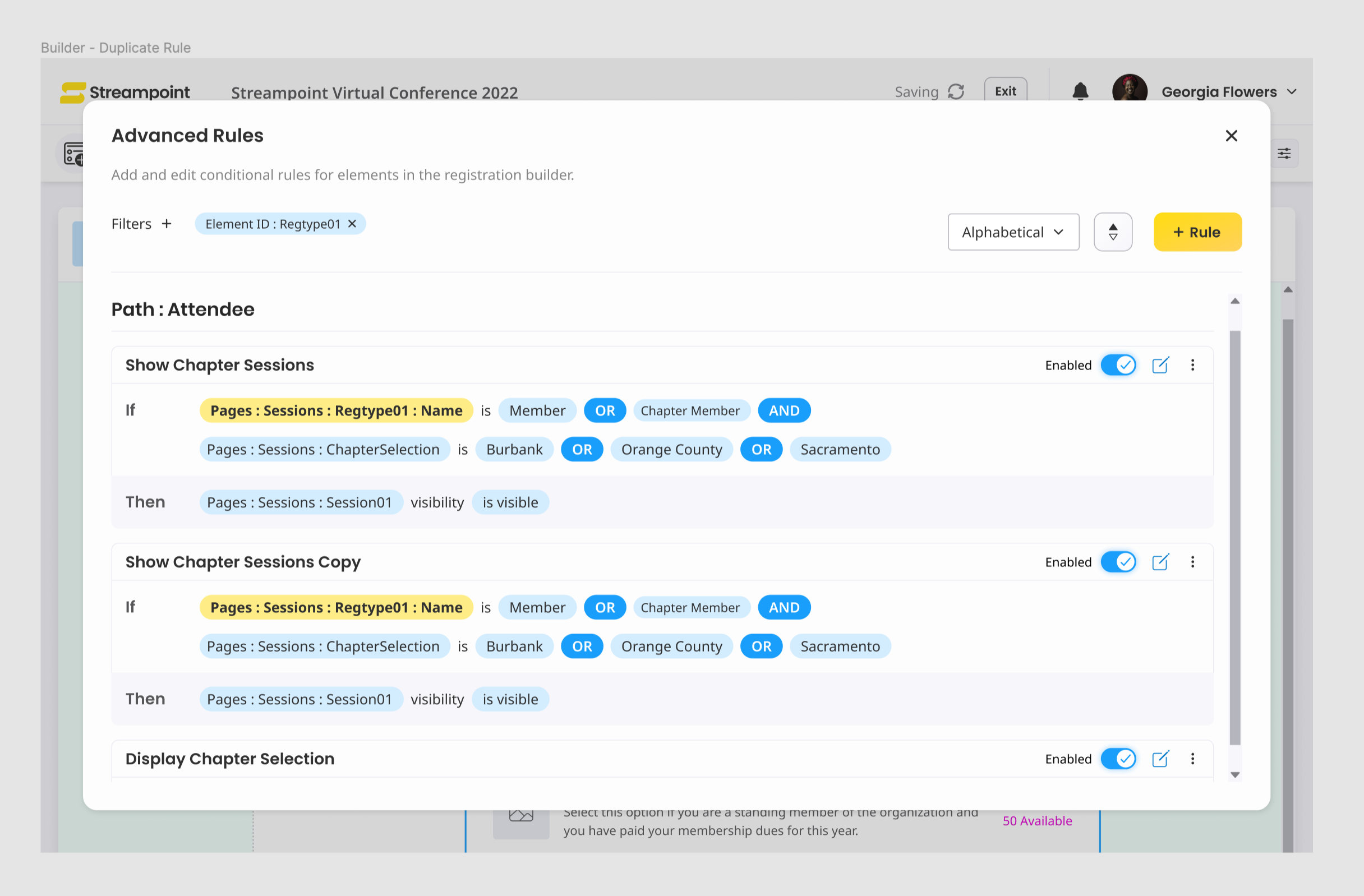
Example of a fully configured rule for testing

Final Design

Production-ready interface balancing power-user capabilities with accessibility for occasional users. The final version incorporated feedback from multiple design iterations with customer success teams and power users, resulting in a visual builder that made complex conditional logic approachable while maintaining the flexibility required for enterprise event configurations across multiple depth levels.


šŸ“ˆ Learnings and Performance

Results Achieved:

  • Nearly 100% reduction in developer configuration requests during the beta. The customers themselves or customer support were able to handle almost all logic requests.
  • Decreased average event setup time by several days for complex international events, since developer involvement is no longer required

Key Takeaways: Early prototyping with power users revealed the importance of clear presentations We focused heavily on a visual builder required, taking several design iterations to balance power-user needs with accessibility for occasional users. Technical constraints around real-time rule evaluation proved challenging to the developers, but they were able to update the back-end to properly support it.

ā˜Žļø Detailed Results and Prototypes

I’m happy to share specific adoption metrics, revenue impact data, prototypes, and additional design iterations during a portfolio review call. This includes things like quantitative performance data, A/B testing results, and technical implementation details that demonstrate the full scope and business impact of this initiative.Ā